

In short: AIDS killed composers and musicians across every kind of music. Among them were the organist Calvin Hampton (died 1984), the singer Klaus Nomi (1983), the producer Jacques Morali of Village People (1991), the cellist and composer Arthur Russell (1992), the songwriter Paul Jabara of “Last Dance” (1992), and the concert composers Kevin Oldham and Chris DeBlasio (both 1993). In the late 1990s the Estate Project for Artists with AIDS began a catalogue of these composers and where their work is kept. This page is a short guide to that history.
Music is easy to lose. A painting at least exists as an object. A score that was never published, or a tape that was never released, can vanish in a single house clearance. In the late 1990s the Estate Project asked the composer and former record executive Joseph Dalton to find out what had happened to the music of composers who had died of AIDS. He started with about 15 names and soon had more than 50, across classical, jazz and pop. “They were the tip of the iceberg,” he told New Music USA.
This page profiles some of the best-known composers on that list. It is not a complete catalogue. For the organisation behind the research, see our history of the Estate Project for Artists with AIDS.
Composers and musicians at a glance
| Name | Born and died | Field |
|---|---|---|
| Calvin Hampton | 1938 to 1984 | Organist and church composer |
| Klaus Nomi | 1944 to 1983 | Countertenor and new wave singer |
| Arthur Russell | 1951 to 1992 | Cellist, composer and disco producer |
| Jacques Morali | 1947 to 1991 | Disco producer and songwriter |
| Paul Jabara | 1948 to 1992 | Songwriter and actor |
| Kevin Oldham | 1960 to 1993 | Pianist and composer |
| Chris DeBlasio | 1959 to 1993 | Composer of art songs |
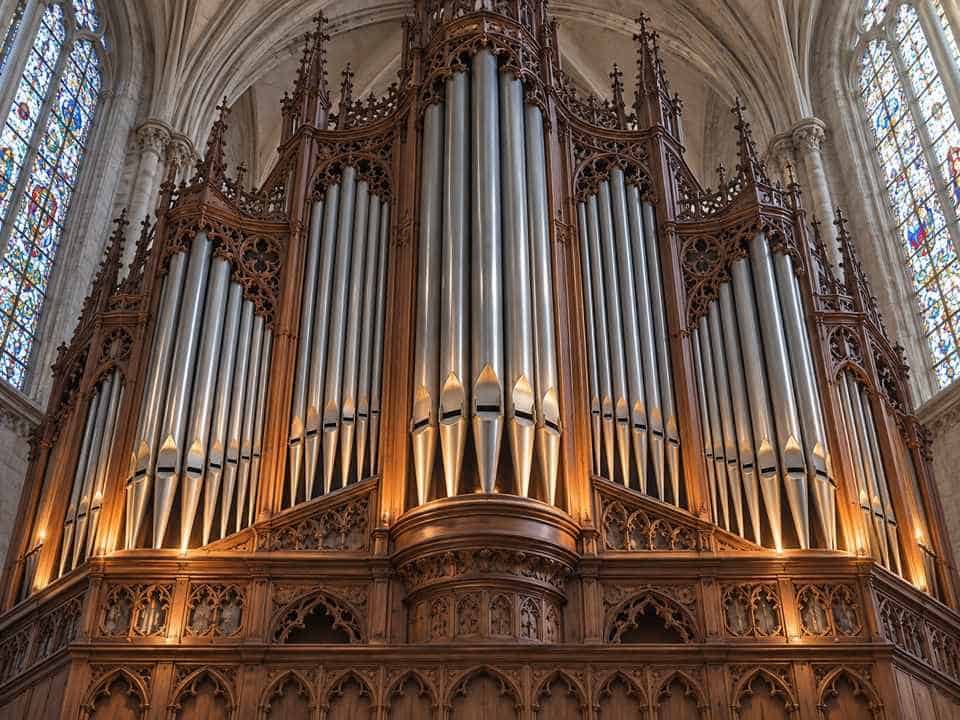
Calvin Hampton (1938 to 1984)
Calvin Hampton was an organist, composer and a central figure in New York church music. For twenty years he was organist and choirmaster at Calvary Episcopal Church in Gramercy Park, where his free “Fridays at Midnight” organ concerts drew crowds. In 1977 the New York Philharmonic played his Concerto for Saxophone Quartet, Strings and Percussion. He stepped down from Calvary in 1983 after being diagnosed with AIDS and died in Port Charlotte, Florida, on 5 August 1984, aged 45.
He kept working almost to the end, writing the large Alexander Variations for two organs while nearly bedridden. His unfinished Concerto for Two Violins was completed by Chris DeBlasio and Allison Sniffin and premiered in Minneapolis in 1993. His papers are at The New York Public Library.
Klaus Nomi (1944 to 1983)
The German-born singer Klaus Nomi mixed opera with new wave in downtown New York and sang backing vocals for David Bowie on television in 1979. He died in 1983, one of the first well-known musicians to die of AIDS. He was a countertenor, a male singer whose range reaches the alto or soprano register. His countertenor voice and stage look made him a cult figure, and he is still the subject of documentaries and tributes.

Arthur Russell (1951 to 1992)
Arthur Russell was born in Oskaloosa, Iowa, and trained as a cellist. In New York he moved between the avant-garde and the dance floor. He was music director at The Kitchen, made disco records under names such as Dinosaur L and Loose Joints, and released one full solo album, World of Echo (1986), in his lifetime. He died of AIDS-related illness on 4 April 1992, aged 40.
He left behind close to 1,000 hours of recordings, most unreleased. His partner, Tom Lee, has worked with Audika Records to release them, and Russell’s archive went to The New York Public Library. His case is one of the clearest examples of how a careful estate can rescue a reputation: he is far better known now than when he died.
Jacques Morali (1947 to 1991)
The French producer and songwriter Jacques Morali created the Ritchie Family and, with Henri Belolo, Village People. He co-wrote and produced hits such as “Macho Man”, “Y.M.C.A.” and “In the Navy”. He contracted HIV in the mid-1980s and died of AIDS-related causes on 15 November 1991, aged 44.
Paul Jabara (1948 to 1992)
Paul Jabara was an actor and songwriter from Brooklyn who appeared in the original Broadway cast of Hair. He wrote “Last Dance” for Donna Summer, which won the Oscar and a Grammy, wrote “The Main Event” for Barbra Streisand, and co-wrote “It’s Raining Men” with Paul Shaffer. He died of AIDS-related lymphoma in Los Angeles on 29 September 1992, aged 44. At the time, newspapers were told only that he had died after “a long illness”, a common phrase in those years.

Kevin Oldham (1960 to 1993)
Kevin Oldham was a pianist and composer. After learning he was HIV-positive in 1988, he largely gave up performing and devoted the rest of his life to composition. He was active in the AIDS Music Emergency Network and the Estate Project. He died on 11 March 1993. His partner and executor, Stephen Rotondaro, oversaw recordings and publication of his music, and his papers are at The New York Public Library.
Chris DeBlasio (1959 to 1993)
Chris DeBlasio studied with John Corigliano, sang at Calvary Church and befriended Calvin Hampton. After his own diagnosis in 1987 he became a founding member of ACT UP in New York. His song cycle (a set of linked songs meant to be performed together) All the Way Through Evening, to poems by Perry Brass, is about living and dying with AIDS. Its song “Walt Whitman in 1989” was included in the first AIDS Quilt Songbook in 1992 and became one of its most performed pieces. He died in March 1993.
Others on the list
The list is long. The pianist and composer Yvar Mikhashoff, a champion of new music at the University at Buffalo, died in 1993. Robert Savage, Michael Callen and many others also died young. In May 2019, alongside performances of John Corigliano’s Symphony No. 1, his 1990 memorial to friends lost to AIDS, the New York Philharmonic gave a late-night concert of music by five young composers who died: Robert Savage, Deolus W. Husband Jr., Robert Chesley, Kevin Oldham and Chris DeBlasio. “The real people who died need a voice, too,” Corigliano said.
For the choreographers and dancers who suffered the same losses, see our page on dancers lost to AIDS.
Where to find their music
- The New York Public Library’s music division holds papers of Calvin Hampton, Kevin Oldham and others, with finding aids online.
- Arthur Russell’s recordings are being released by Audika Records with his estate.
- The AIDS Quilt Songbook remains in print and is still sung in recitals.

Key takeaways
- AIDS killed composers in church music, concert music, disco, pop and the avant-garde.
- The Estate Project began a catalogue of these composers in the late 1990s; it soon passed 50 names.
- Executors such as Tom Lee for Arthur Russell and Stephen Rotondaro for Kevin Oldham rescued large bodies of work.
- Many papers are now at The New York Public Library.
Common questions
Which famous composers died of AIDS?
Among them are Calvin Hampton, Klaus Nomi, Jacques Morali, Arthur Russell, Paul Jabara, Kevin Oldham and Chris DeBlasio. Freddie Mercury and Sylvester, both singers and songwriters, also died of AIDS.
What was the Estate Project’s composer catalogue?
A research project led by Joseph Dalton in the late 1990s to list composers who had died of AIDS or were living with HIV, with their works, executors and archive locations.
What is the AIDS Quilt Songbook?
A collection of new art songs about AIDS, first performed in 1992, named after the AIDS Memorial Quilt.
Where are Arthur Russell’s recordings?
His partner Tom Lee manages the estate with Audika Records, which has released many albums since 2004; his archive is at The New York Public Library.
How we wrote this: Biographical details come from The New York Public Library finding aids, obituaries in The New York Times and the Los Angeles Times, and reporting by New Music USA and The New Yorker. Dates were checked against at least two sources. Last checked November 2026.
Sources
- New Music USA: Estate Project preserving the work of composers with AIDS
- The New York Public Library: Calvin Hampton papers
- The New York Public Library: Kevin Oldham papers
- The New Yorker: The word-of-mouth resurgence of Arthur Russell
- The New York Times: Charles Arthur Russell Jr. obituary (1992)
- Los Angeles Times: Paul Jabara obituary (1992)
- Wikipedia: Jacques Morali
- ClevelandClassical: Remembering composers lost to AIDS