
Dancers and Choreographers Lost to AIDS: A Guide to a Lost Generation

Dancers and Choreographers Lost to AIDS: A Guide to a Lost Generation

In short: AIDS devastated American dance in the 1980s and 1990s, killing dancers and choreographers in every style. Among the best-known losses were Michael Bennett, creator of A Chorus Line (died 1987), Arnie Zane, co-founder of the Bill T. Jones/Arnie Zane Dance Company (1988), Alvin Ailey (1989), the Paul Taylor dancer and choreographer Christopher Gillis (1993), Rudolf Nureyev (1993) and the choreographer Ulysses Dove (1996). Because dance lives in bodies, the Estate Project for Artists with AIDS paid for video and notation so their works could be restaged.

Dance was hit harder than almost any other art. Companies were small and close, many dancers were gay men in their twenties and thirties, and the art form keeps little written record. When a choreographer died, the knowledge of how a work was made often died with them, unless dancers who had learned it were still alive to teach it. The New York Times has described the effort to trace “the path of AIDS through the dance world” as a project still under way decades later.

This page profiles some of the dancers and choreographers whose deaths were recorded, and explains how their dances survive. It is a starting point, not a full list. For the wider project that tried to save this work, see our history of the Estate Project for Artists with AIDS.

Dancers and choreographers at a glance

NameBorn and diedAgeBest known for
Michael Bennett1943 to 198744Director and choreographer of A Chorus Line
Arnie Zane1948 to 198839Co-founder, Bill T. Jones/Arnie Zane Company
Alvin Ailey1931 to 198958Founder, Alvin Ailey American Dance Theater; Revelations
Christopher Gillis1951 to 199342Dancer and choreographer, Paul Taylor Dance Company
Rudolf Nureyev1938 to 199354Ballet star; director, Paris Opera Ballet
Ulysses Dove1947 to 199649Choreographer for Ailey, New York City Ballet and Royal Swedish Ballet
An empty dance studio with a wooden floor, barres and tall windows
Dance companies in the 1980s lost dancers, teachers and choreographers within a few years.

Michael Bennett (1943 to 1987)

Michael Bennett began as a Broadway chorus dancer and became one of its most influential directors and choreographers. He won seven Tony Awards and created A Chorus Line (1975) from taped sessions with working dancers. He also staged Company, Follies and Dreamgirls. Diagnosed with AIDS around the end of 1985, he moved to Tucson, Arizona, for treatment and died there of AIDS-related lymphoma on 2 July 1987, aged 44. He left a share of his estate to AIDS research, and his papers are at Yale.

Arnie Zane (1948 to 1988)

Arnie Zane was a photographer who turned to dance after meeting Bill T. Jones at university in Binghamton, New York. The two formed the Bill T. Jones/Arnie Zane Company in 1982, known for duets in which partners of different sizes and races lifted each other regardless of gender. Zane died of AIDS-related lymphoma at home in Valley Cottage, New York, on 30 March 1988, aged 39.

Jones kept the company and its name. In 1989 he made D-Man in the Waters, shaped by Zane’s death and the illness of company dancer Demian Acquavella, and later Still/Here (1994), built from workshops with people facing terminal illness.

A line of dancers' shoes on a stage floor under a spotlight
A Chorus Line’s creator, Michael Bennett, died in 1987.

Alvin Ailey (1931 to 1989)

Alvin Ailey founded the Alvin Ailey American Dance Theater in 1958, and his work Revelations is one of the most performed modern dances in the world. He received the Kennedy Center Honors in December 1988. He died a year later, on 1 December 1989, aged 58. At the time the cause was reported as a rare blood disorder; it was later disclosed that he died of AIDS. He had wanted to shield his mother from the stigma. His company remains one of the best-known in the world.

Christopher Gillis (1951 to 1993)

Christopher Gillis was a Canadian-born dancer who joined the Paul Taylor Dance Company in 1976 and became one of its leading performers. He was seen as a possible successor to Taylor, and also choreographed works performed by the Taylor company and by the White Oak Dance Project. He died of AIDS at his home in Manhattan on 7 August 1993, aged 42.

A video camera on a tripod recording a dance rehearsal
Video and notation became the main way to save choreography for future casts.

Rudolf Nureyev (1938 to 1993)

The Soviet-born ballet star Rudolf Nureyev defected to the West in 1961 and became one of the most famous dancers of the century, later directing the Paris Opera Ballet. He died in Paris in January 1993. His doctor confirmed after his death that he had AIDS. Nureyev’s death showed that the epidemic reached the top of classical ballet as well as downtown modern dance.

Ulysses Dove (1947 to 1996)

Ulysses Dove danced with Merce Cunningham and with the Alvin Ailey company before becoming a choreographer known for fast, intense work. He made dances for the Ailey company, New York City Ballet and the Royal Swedish Ballet, and won an Emmy for choreography in 1995. Diagnosed with HIV in 1982, he kept it private. His last ballet, Twilight, premiered at New York City Ballet in May 1996. He died on 11 June 1996, aged 49.

How lost dances survive

A dance can be saved in three main ways. Dancers who learned it can teach it to the next cast. It can be recorded on video, which shows the steps but not always the intentions. Or it can be written down in dance notation. Labanotation: a system of symbols, invented by Rudolf Laban in 1928, that records the direction, level and timing of each movement, so a trained reader can turn the score back into dance. The Estate Project’s 1995 grants paid for exactly these things: videotaping performances and notating choreography so that works could be restaged after their makers had died.

Companies matter too. Repertory: the set of works a company keeps ready to perform. The Ailey, Taylor and Bill T. Jones companies all continued after the deaths of key artists and kept their works in repertory. Where no company survives, archives such as the Jerome Robbins Dance Division of The New York Public Library hold films, notes and programmes that let scholars and dancers piece works back together.

Dancers in silhouette against blue light rippling like water
Bill T. Jones made D-Man in the Waters in 1989 in the wake of the epidemic.

For the musicians and songwriters lost in the same years, see our page on composers lost to AIDS. For practical advice on keeping a body of work together, read our guide to estate planning for artists.
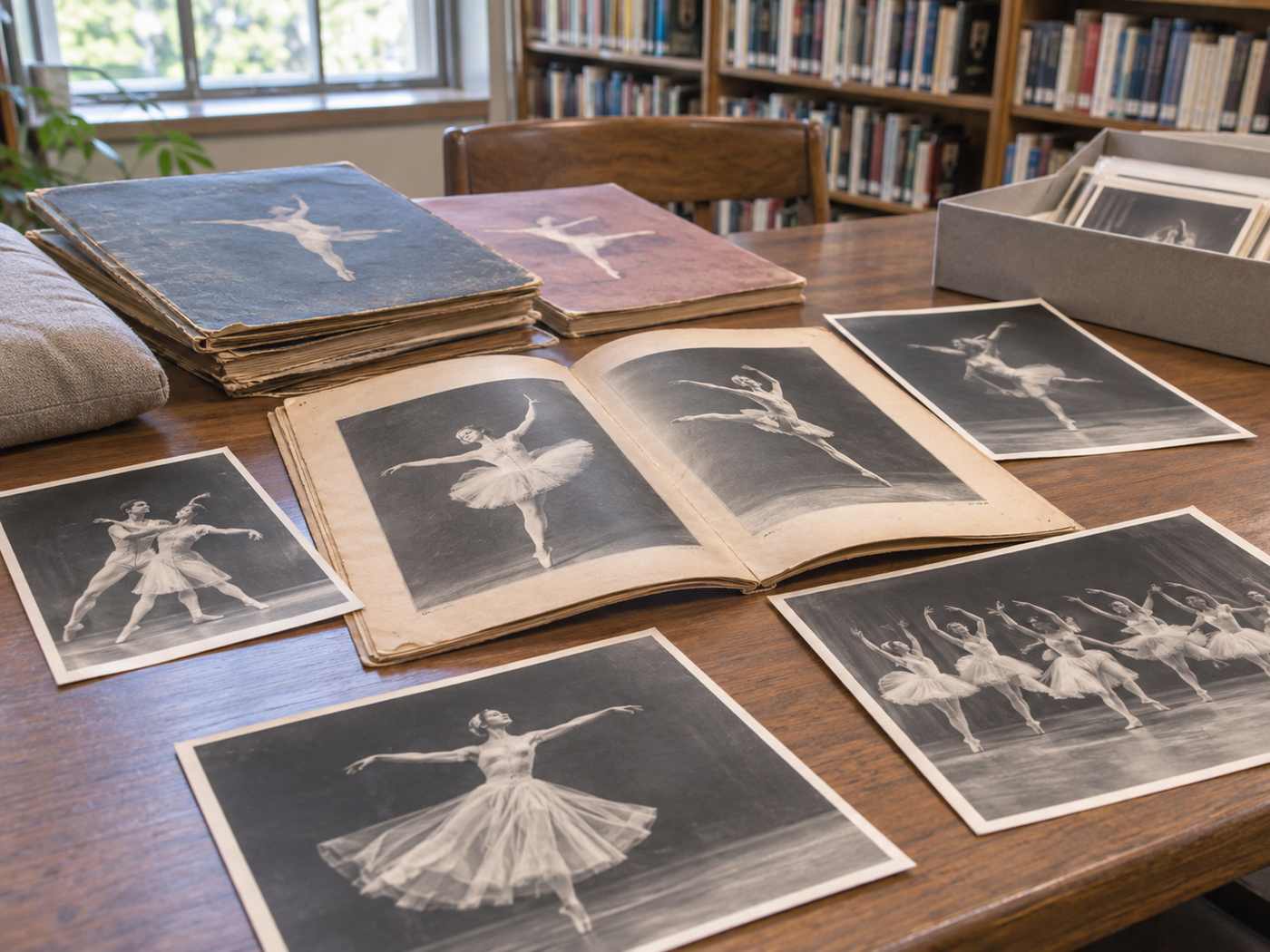
Old dance programmes and photographs spread on a library table
Dance libraries hold programmes, films and notes that let lost works be restaged.

Key takeaways

  • AIDS killed leading choreographers in Broadway, modern dance and ballet in the 1980s and 1990s.
  • Michael Bennett, Arnie Zane, Alvin Ailey, Christopher Gillis, Rudolf Nureyev and Ulysses Dove are among the best-documented losses.
  • Stigma meant that causes of death were often hidden at the time and disclosed later.
  • Video, notation and living companies are the main ways their dances survive.

Common questions

Which famous choreographers died of AIDS?

Michael Bennett, Arnie Zane, Alvin Ailey, Christopher Gillis and Ulysses Dove are among them. The ballet star Rudolf Nureyev also died of AIDS.

Why was dance hit so hard by AIDS?

Companies were small, many dancers were young gay men, and dance keeps little written record, so each death could take repertory and teaching knowledge with it.

Did Alvin Ailey die of AIDS?

Yes. His death in 1989 was first attributed to a blood disorder; it was later disclosed that he died of AIDS.

How are lost dances restaged?

From dancers who learned the work, from video recordings, and from written dance notation, often held in dance archives.

What dance did Bill T. Jones make after Arnie Zane died?

D-Man in the Waters (1989), and later Still/Here (1994).

How we wrote this: Dates and details come from obituaries in The New York Times, the Los Angeles Times and UPI, company and archive records, and later reporting. Dates were checked against at least two sources. Last checked November 2026.

Sources

The Estate Project for Artists with AIDS: A History (1991 to 2003)

The Estate Project for Artists with AIDS: A History (1991 to 2003)

In short: The Estate Project for Artists with AIDS was founded in 1991 by the Alliance for the Arts in New York, led by its president Randall Bourscheidt, with Patrick Moore as project director. It helped artists with HIV and AIDS plan their estates, published the planning guide Future Safe, gave grants for legal help and documentation, built an online Virtual Collection of artworks, and in 2003 launched a National Registry for Artists with AIDS. Its records from 1989 to 1999 are held by The New York Public Library.

By the end of the 1980s, AIDS was killing painters, composers, dancers, writers and filmmakers in their thirties and forties, often before they had made a will. Families who did not understand the work, or who rejected the artist, sometimes threw paintings into skips. Unpublished scores sat in boxes. Choreography that lived only in dancers’ bodies disappeared when those dancers died. The Estate Project for Artists with AIDS was set up to stop that loss.

This page tells its story, from a short research project to a national organisation, and explains where its work can still be found. This site is an independent reference that uses the old web address to keep the subject easy to find. We are not the Estate Project or the Alliance for the Arts, which merged into the Municipal Art Society, and we hold none of their records.

Rows of grey archival boxes on library shelving
The Estate Project’s own records, 1989 to 1999, are now held by The New York Public Library.

How the Estate Project began

The Alliance for the Arts was a New York policy and research group, best known for reports on the economic weight of culture in the city. Its president from 1989 to 2010, Randall Bourscheidt, grew worried about artists dying young and their work being discarded. According to The New York Public Library’s finding aid, the Alliance formed the Estate Project in 1991 as a temporary project to survey the needs of artists with AIDS in planning their estates, and to look at options for documenting, storing and conserving their work. Its working title was “Artists’ Trust”.

Bourscheidt hired Patrick Moore, then a young arts marketer who had worked at The Kitchen in downtown New York and been active in ACT UP. In a 2017 oral history for the Smithsonian’s Archives of American Art, Moore described how the project began as a funded report and grew from there. His own partner had died of AIDS, and he later said that his whole professional life in those years was about the epidemic.

Future Safe: a plain guide to wills

The first public product was a booklet called Future Safe: Estate Planning for Artists in a Time of AIDS. It was designed by Bureau, the studio set up by Donald Moffett and Marlene McCarty of the activist art collective Gran Fury. The booklet explained basic legal steps such as wills and executors and listed archives and arts agencies that might accept an artist’s work.

Its advice applied to every artist, sick or well: plan now, name someone who understands the work, and record what exists. By 1995, according to The New York Times, the Alliance had distributed some 50,000 copies. The booklet won design awards and became the project’s calling card.

An empty artist's studio with canvases stacked against a wall
Its founding worry was simple: work left in studios was being sold off, given away or thrown out.

From advice to grants

In its first years the project tried to offer every service itself. By the mid-1990s it changed course. In June 1995 it awarded its first grants, about $200,000 to 12 specialist programmes, for free lawyer consultations, artist stipends, photographing and videotaping artwork, and notating choreography so that dances could be restaged. Moore later explained the model: raise money, ask a foundation such as the New York Community Trust to match it, and re-grant the total to groups already doing good work.

The project also opened offices beyond New York. A Los Angeles office, which Moore ran after moving west, staged the exhibition “TranscEND AIDS” at the Los Angeles Center for Photographic Studies on Day Without Art in 1995. A South Florida coordinator worked with artists in Miami. By then the project had become a permanent organisation with a national reach.

Music, dance and film

The Estate Project took a wide view of “artist”. It worked with film archives to preserve films by artists who had died, and with dance companies on notating and videotaping work. For music, the composer and former record-label director Joseph Dalton researched the lives and archives of composers who had died of AIDS or were living with HIV. He began with about 15 names and soon found more than 50 who had died, across classical, jazz and pop. That research grew into a catalogue of composers, which we summarise in our guide to composers lost to AIDS. A similar effort covered dancers and choreographers, described in our page on dancers lost to AIDS.

A printed planning booklet open on a desk beside a pen and a will form
Future Safe explained wills and executors in plain language for artists in every medium.

The Virtual Collection

In late 1998 the project launched the Virtual Collection, an online database of digitised artworks by artists who had died of AIDS or were living with HIV. The New York Times reported that it was expected to grow to more than 6,000 images, and POZ magazine described it as some 3,000 images by 150 artists when it opened. Moore worked with archives across the country, from Visual AIDS in New York to the Los Angeles Gay and Lesbian Center, to gather the material.

It was an early example of a cultural group using the web to preserve work rather than just promote it. Moore said at the time that he hoped the collection would still be running long after many of the works themselves had gone.

A 1990s computer monitor showing a grid of artwork thumbnails
The Virtual Collection put thousands of digitised artworks online in the late 1990s.

Fundraising with artists

The project also raised money through art. In 1998 Moore and Bourscheidt produced The Geldzahler Portfolio, a set of prints honouring the curator Henry Geldzahler, one of the project’s early supporters. A second portfolio, 1989, followed. Prints from these portfolios are now in museum and private collections, and still appear at auction.

A portfolio of fine-art prints laid out on a white table
Print portfolios such as The Geldzahler Portfolio raised money for the project.

The National Registry and later years

On 1 December 2003, World AIDS Day, the project launched the National Registry for Artists with AIDS, an online record of artists who had died or were living with the disease, with notes on their work and where it was held. The library’s finding aid notes that the registry is not documented in the Estate Project’s own records, because the papers had already been given to the library in 1999.

Moore left in 2001 and later became director of the Andy Warhol Museum in Pittsburgh. In 2004 Beacon Press published his book Beyond Shame, which had been commissioned by the Alliance. When the Alliance for the Arts later folded into the Municipal Art Society, the project’s remaining funds went with it, as Moore recalled in his oral history. The website at this address eventually lapsed. Bourscheidt died in 2026; his New York Times obituary named the Estate Project among his main achievements.

Where to find the records now

  • The New York Public Library holds the Estate Project for Artists with AIDS records, 1989 to 1999, including grant files, correspondence and the development of Future Safe.
  • The Archives of American Art at the Smithsonian holds Patrick Moore’s 2017 oral history, part of its project on visual arts and the AIDS epidemic.
  • Visual AIDS in New York keeps an artist registry and archive of artists with HIV, and runs Day With(out) Art each 1 December.
  • For individual composers and dancers, the papers often sit in specialist archives such as the library’s music and dance divisions.
A quiet library reading room with long wooden tables and green lamps
Researchers now read the story in archives rather than on a live website.

Key takeaways

  • The Estate Project for Artists with AIDS was founded in 1991 by the Alliance for the Arts in New York.
  • Randall Bourscheidt led the Alliance; Patrick Moore was the project’s founding director until 2001.
  • Future Safe, a plain guide to wills for artists, reached some 50,000 readers by 1995.
  • The project funded legal help, documentation and dance notation, and built an online Virtual Collection.
  • Its 1989 to 1999 records are at The New York Public Library.

Common questions

Is the Estate Project for Artists with AIDS still active?

No. Its parent, the Alliance for the Arts, merged into the Municipal Art Society, and the project’s website lapsed. Its records survive at The New York Public Library.

What was the National Registry for Artists with AIDS?

An online record launched on 1 December 2003 listing artists who had died of AIDS or were living with HIV, with notes on their work and where it was kept.

Who founded the Estate Project?

The Alliance for the Arts, under its president Randall Bourscheidt, with Patrick Moore as founding project director.

What was Future Safe?

A booklet, Future Safe: Estate Planning for Artists in a Time of AIDS, explaining wills, executors and archive options for artists in every medium.

Where can I see the artworks from the Virtual Collection?

The original database is no longer online. Visual AIDS and museum collections are the best places to look for work by individual artists.

For practical steps any artist can take today, read our guide to estate planning for artists, which builds on Future Safe‘s advice.

How we wrote this: This history is based on The New York Public Library’s finding aid for the Estate Project records, Patrick Moore’s oral history at the Archives of American Art, and contemporary reporting in The New York Times, the Los Angeles Times and POZ. Dates were checked against at least two sources. Last checked November 2026.

Sources